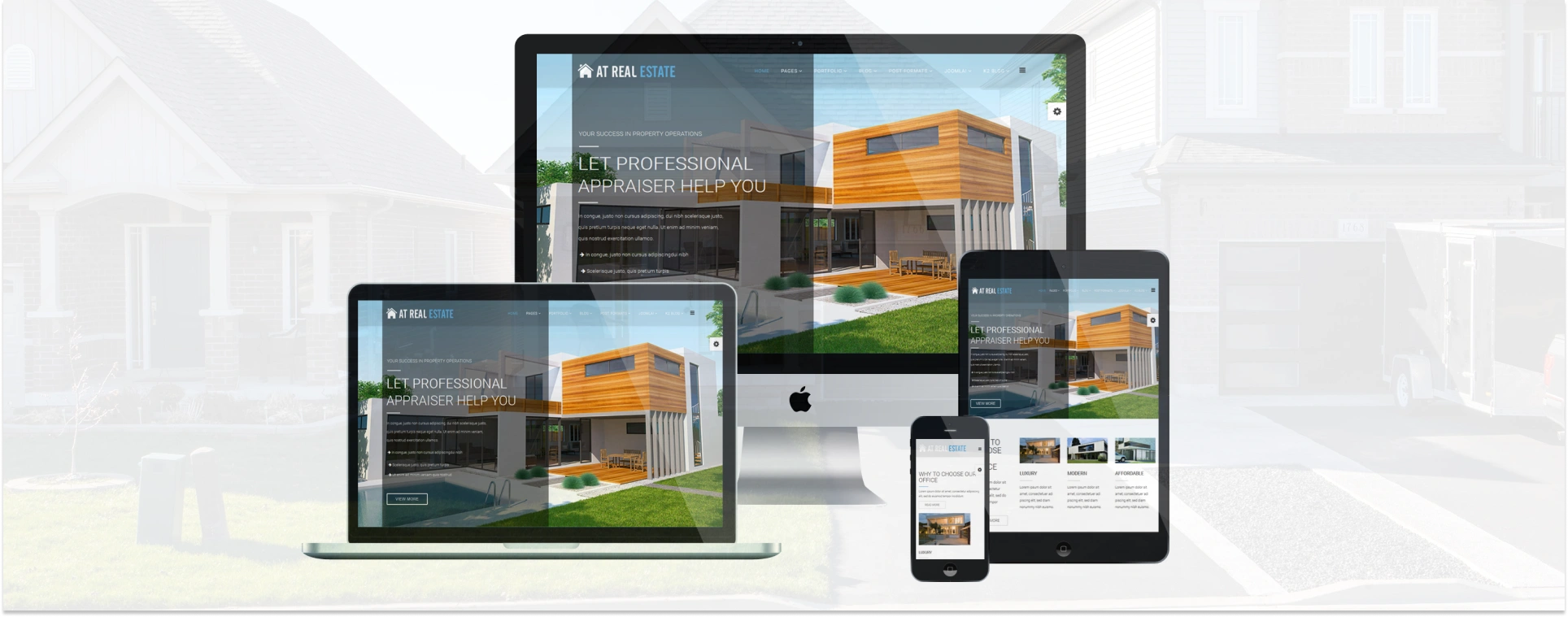
Real Estate: Building a Website That Sells While You Sleep
In 2026, real estate success is no longer driven by listings alone.
It’s driven by digital infrastructure.
The top-performing brokers and developers understand one thing:
Your website should not be a brochure.
It should be a 24/7 lead generation and qualification engine.
If your platform isn’t capturing, filtering, and nurturing buyers automatically — you’re losing deals to competitors who are.
The Shift: From Listings to Lead Engines
Traditional real estate websites focus on:
Property galleries
Basic contact forms
Static neighborhood pages
But modern buyers behave differently.
They:
Research late at night
Compare properties across multiple sites
Expect instant information
Prefer digital tours before physical visits
If your site doesn’t support this behavior, you lose attention within seconds.
A high-converting real estate website must guide users through a strategic funnel — not just display properties.
What Makes a Website “Sell While You Sleep”?
A revenue-driven real estate platform includes five core components:
Advanced Property Search Infrastructure
Modern buyers expect:
Smart property search filters
Price range sliders
Map-based search
Neighborhood filtering
School zone filters
Property type segmentation
Basic search bars are no longer enough.
Advanced filtering reduces friction and keeps buyers engaged longer — increasing inquiry probability.
IDX & MLS Integration Done Right
IDX is not optional in 2026.
But simply installing an IDX feed is not enough.
It must be:
Seamlessly integrated into your design
SEO-optimized
Fast-loading
Mobile responsive
Structured with clean URLs
Poor IDX integration creates slow pages and weak search rankings.
Proper integration turns your website into a local property authority.
Hyper-Local SEO Authority
Serious buyers don’t search “homes for sale.”
They search:
“3 bedroom homes in Downtown Austin”
“Luxury apartments in Marina Dubai”
“Family homes near XYZ School”
Winning real estate websites build:
Neighborhood landing pages
Community guides
Local market reports
Interactive maps
Area-based content clusters
This positions your brand as the local expert — not just another agent.
Intelligent Lead Capture Systems
This is where most real estate websites fail.
Instead of simple “Contact Us” forms, high-performing platforms use:
Conditional lead forms (buyer vs seller paths)
Gated premium listings
Downloadable market reports
Smart popups based on exit intent
Mortgage calculators
Booking calendar integration
The goal isn’t more traffic.
It’s better-qualified leads.
When your forms ask the right questions upfront, your sales conversations become shorter and more productive.
Virtual Selling Capabilities
Modern buyers expect digital immersion before committing to viewings.
Your website should include:
3D property tours
Drone footage
Interactive floor plans
Video walkthroughs
Mobile-first experience
In 2026, virtual experience directly impacts conversion rates.
Buyers who view immersive content are significantly more likely to request showings.
Automation: Turning Traffic into Appointments
A website that “sells while you sleep” does more than collect emails.
It automates follow-up.
Smart systems include:
Instant lead notifications
Automated email sequences
CRM integration
Lead scoring
Appointment scheduling tools
Imagine:
A buyer visits at 11:45 PM.
Views three properties.
Downloads a neighborhood report.
Books a viewing for Saturday.
Without you lifting a finger.
That’s infrastructure.
Mobile-First Performance Is Non-Negotiable
Over 70% of real estate traffic now comes from mobile devices.
If your site:
Loads slowly
Has small buttons
Makes search difficult
Forces zooming
You’re losing high-intent buyers instantly.
Fast-loading, mobile-optimized real estate websites consistently outperform desktop-heavy designs.
Speed equals trust.
Trust equals inquiries.
The Psychology of Conversion in Real Estate
High-converting platforms are built around:
Scarcity (“Only 2 units left”)
Social proof (Recent sales, testimonials)
Urgency (Price reduction alerts)
Personalization (Recommended properties)
Clear calls-to-action
Design isn’t decoration.
It’s persuasion architecture.
The Real Question: Is Your Website Working for You?
Ask yourself:
Are you getting qualified leads daily?
Are users staying more than 60 seconds?
Are visitors exploring multiple listings?
Is your platform ranking for neighborhood searches?
Is your CRM integrated?
If not, your website is costing you deals.
Final Thoughts
In 2026, real estate success belongs to professionals who treat their website as:
Digital infrastructure
Automated sales support
Authority platform
Lead qualification system
Not just an online presence.
A properly built real estate website doesn’t just showcase properties.
It builds trust.
Captures interest.
Qualifies prospects.
And generates revenue — even while you sleep.